Domiros: Crafting Polished Presentations with a Premium Template
There's a familiar frustration that hits when you open a blank presentation file. You have the ideas, the data, the story—but staring at that empty grid feels like standing in front of a blank canvas with a deadline. For designers, entrepreneurs, and content creators, the pressure isn't just about what you say, but how it looks while you're saying it. A disjointed slide deck can undercut even the strongest pitch, making your work feel less credible before you've uttered a single word. This is where a well-structured template system like Domiros steps in, not as a crutch, but as a foundation for visual clarity.
A System Built for Visual Consistency
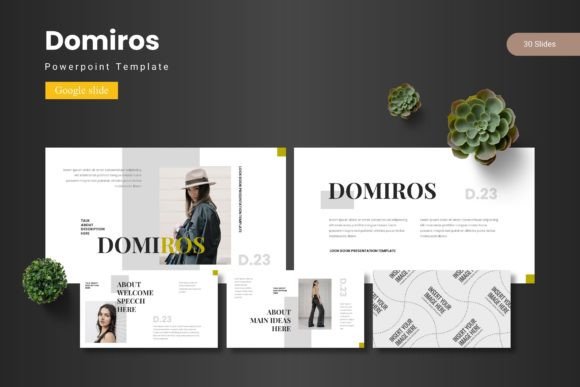
What makes the Domiros - Google Slide Template different from a random collection of slide layouts is its approach to cohesion. With over 150 total slides spread across five premade color schemes, it functions less like a single template and more like a design toolkit. Each color variation contains 30 meticulously crafted slides, giving you enough range to build a full presentation without repeating layouts. The inclusion of section break slides is particularly useful for longer decks, allowing you to pause visually and guide your audience through different chapters of your narrative.
The real value here is in the details. The handcrafted infographics aren't just decorative; they're functional tools for displaying data, timelines, processes, and comparisons. Because everything is built on master slides, making a change to a font, color, or logo placement updates the entire deck automatically. This saves hours of manual tweaking and ensures that from the first slide to the last, your presentation maintains a unified look. For anyone building a brand identity, this kind of consistency is non-negotiable.
Practical Applications Beyond the Boardroom
While the obvious use case is for business pitches and corporate reports, a versatile template system like this finds its way into a surprising number of projects. Think about the content creator designing a media kit to send to potential sponsors. Or the small business owner creating a visual guide for a new product launch. The drag-and-drop picture placeholders make it easy to swap in your own imagery without distorting the layout, which is a godsend for those who aren't design professionals but need professional results.
Consider these real-world scenarios where Domiros shines:
- Brand Guidelines Presentation: Use the gallery and portfolio slides to showcase your logo variations, color palette, and typography in a clean, organized format that clients or team members can easily reference.
- Marketing Campaign Decks: Structure your campaign proposal with clear sections for goals, audience, creative assets, and timeline, using the infographics to visualize performance metrics or customer journey maps.
- Workshop or Course Materials: Create engaging educational content with a mix of text-heavy information slides and visual breaks, maintaining student engagement without sacrificing clarity.
- Event Invitations or Programs: Design sophisticated digital invitations or event schedules that can be shared as a PDF or presented live, with a polished feel that sets the right tone.
- Internal Communications: From team training modules to quarterly business reviews, a well-designed template elevates internal documents, making information easier to digest and more likely to be remembered.
Matching Design to Communication Goals
The power of a tool like Domiros isn't just in its aesthetic appeal, but in how it supports your communication strategy. A modern, clean design with ample white space (a hallmark of this template) conveys professionalism and confidence. It allows your content to breathe, directing the viewer's eye to what matters most—your message. This is crucial for audience engagement; cluttered slides overwhelm, while well-structured ones guide.
When you're building a brand, every touchpoint matters. The visual language of your presentation should align with your website, your social media graphics, and your print materials. Using a template with a cohesive style helps reinforce brand recognition. If your brand identity uses a specific color scheme or graphic style, the five color variations give you a starting point to match that identity closely. You're not starting from scratch; you're building on a framework that already understands visual harmony.
A key piece of advice for anyone using a template library is to review the included font styles carefully. The typography chosen for a template sets its entire tone. Is it a modern sans-serif that feels tech-forward? A classic serif that feels established and trustworthy? The Domiros system comes with specific font recommendations. Sticking to these or making thoughtful, consistent substitutions is vital. A mismatched font can break the visual spell you're trying to create. Always test font pairings in context—what looks good in a heading might become unreadable in a small caption.
Maximizing Your Investment in Design Assets
For the entrepreneur or freelancer, time is a direct cost. Hours spent wrestling with formatting are hours not spent on client work, product development, or strategy. A template system is an investment in efficiency. The fact that all graphics are resizable and editable means you can adapt the assets for other projects—perhaps pulling an infographic style for a social media graphic or using a layout concept for a printed brochure. This extends the utility far beyond a single presentation.
Before you dive in, a practical step is to read the included readme file. It will specify the fonts used and where to source the preview photos. Ensuring you have the correct commercial licenses for any fonts or images is a critical part of professional design work. It protects you legally and ensures the final product looks exactly as intended, without substituting elements that could alter the design's integrity.
Ultimately, a tool is only as good as the person using it. The Domiros - Google Slide Template provides a robust, flexible foundation. But its true value is realized when you infuse it with your unique content, your brand's voice, and your specific goals. It handles the heavy lifting of layout and visual consistency, freeing you to focus on the story you need to tell. In a world where attention is scarce, giving your ideas a polished, professional stage can make all the difference in whether they're heard, understood, and acted upon.